Friday, March 18, 2016

Making the Cut: Ships in the Locks (Photo Forensics 101)

Puget Sound Maritime researcher Joe Baar takes a second look at some photos associated with the Lake Washington Ship Canal. This is one of an occasional series of essays commemorating the centennial of the Ballard Locks and the Ship Canal.

Several early photographic images of vessels transiting the Ship Canal are well known and the captions commonly associated with them claim they were taken during the canal’s first day, or first year, of operation. Sometimes we must take such assertions with a large dose of salt.

In one example, the photo reproduced on page 262 of The H.W. McCurdy Marine History of the Pacific Northwest (Gordon Newell, ed., 1966) shows the tug HORNET towing the freighter ss EASTERN MERCHANT eastbound out of the large lock; the caption purports EASTERN MERCHANT was the “...largest vessel to pass through the locks in their first year of operation.” That year would have run from August 1916 through August 1917. Lloyd’s Register of Ships tells us Asano Dockyard in Tsurumi, Japan, completed the 8,152-ton EASTERN MERCHANT in December 1919 to the order of the United States Shipping Board. As well, Merchant Vessels of the United States shows the tug HORNET was built in Seattle in 1920, so this photo could not have been taken earlier, belying the McCurdy caption. Much gratitude to Karl House for pointing out this inconsistency.


Confusion has resulted from the fact both locks were open to traffic by early August 1916, although the project’s official dedication and the celebratory maritime parade did not take place until July 4, 1917. By that date, shipping had been arriving in Lake Washington via this conduit for eleven months.

ss Roosevelt followed by mv Orcas at the Fremont Bridge, 7/4/1917;
 Puget Sound Maritime Historical Society, Joe Williamson Collection


ss ROOSEVELT at the Montlake Cut, 7/4/1917;
Puget Sound Maritime Historical Society, Joe Williamson Collection


The REAL First Transit

The U.S. Coast and Geodetic Survey ship GEDNEY, shown immediately below, most likely records the first transit of the Lake Washington Ship Canal by an ocean-going vessel. This event probably would have occurred during 1916. A jubilant note on one copy of the print’s reverse side informs us this trip was made with “No Pilot.” This notation lends credibility to the photo’s provenance because survey ships normally gather information about uncharted waters without using local guides. Also of interest is the absence of smaller craft visible in the image (aside from tugs), a certain indicator this trip was not the same one as the July 4th, 1917 transit led by the ROOSEVELT.


Survey ship USC&GS GEDNEY Eastbound from the Large Lock, c. 1916;
Puget Sound Maritime Historical Society, Joe Williamson Collection


Survey ship USC&GS GEDNEY at Sitka, Alaska, before 1912;
Puget Sound Maritime Historical Society, Joe Williamson Collection

-- Joe Baar


Joe Baar has been fascinated with ships since his childhood on Brace Point. His lifelong avocation has included stints with the Sea Explorers, small boat school courtesy of the U.S. Army, working on yachts on Lake Union, and amassing a large collection of maritime books.


Friday, February 26, 2016

Making the Cut: The Yesler Mill at Yesler

The Lake Washington Ship Canal was constructed 100 years ago bringing change, both positive and negative, to Puget Sound waterways. A number of historians and educators are working on plans for commemorating this watershed event and looking deeper into the effects on the communities touched by the canal. This is the first in a series of glimpses into our efforts which we call "Making the Cut."

This is a work in progress! For more on the history of the second Yesler Mill, see our blogpost: Yesler Mill on Union Bay.

In 1888 Henry Yesler and friends built a small sawmill on the north shore of Union Bay on Lake Washington. A small company town called...what else?...Yesler grew up behind the mill and up toward the tracks of the Seattle Lake Shore and Eastern Railway (now the Burke Gilman Trail). A wharf extended into the bay on a point of land roughly where the Urban Horticulture Center now stands west of Laurelhurst. Logs were floated in to the mill run and processed into lumber and later shingles which were shipped out by train. Maybe, probably, still working on that angle.

The Yesler Mill survived at least two fires (typical for mills of the era), but the lowering of the lake caused by the cutting of the ship canal in 1916 left its wharf high and somewhat dry and the mill pond only slightly damp. While some lake mills may have benefited from access to the big steamers that the cut afforded, the Yesler Mill, on a shallow bay, was already too low in the water to make that leap. At attempt was made to dredge a channel into the bay in order to make the mill run viable again. This last ditch effort must have had only limited success because by the mid-1920s the mill was gone.

The mill's loss was the U Dub's gain. All the mill acreage, as well as most of the newly exposed wetlands at Union Bay, was acquired by the university with new uses in mind. That is a story for another day.


The dredged mill run can be seen about center top in this aerial from 1937. Even after the mill closed, neighbors attempted to keep the run open for boat launches. The area that is now the University Village can be clearly seen laid out in farming plots, lower right. University of Washington Special Collections.


The historian regrets that the era of the mill is well below the horizon for useful oral history. However, memories survive in unexpected places. In 1971 not-yet-famous author Ivan Doig wrote a piece for The Seattle Daily Times* based on the reflections of his neighbor, Bill Lozott,. Born in 1907, Lozott still lived on the street where he grew up on the hill behind University Village in an area called Exposition Heights, no doubt for the AYP Expo that took place on the grounds of the University in 1909. Lozott remembered the old neighborhood well. Some snippets from Doig's article:

"Around the mill and its wharf sprouted the village of Yesler, a going little community now vanished almost with a trace except in the memories of Bill Lozott and a few others."
"Another attraction: immense mounds of cedar sawdust which, come summer, would ignite in spontaneous combustion."
"The water level receded until a flat triangle of land appeared down the hill to the west of the Lozott home [now University Village.] About 1924, as Bill remembers it, 'a Japanese family dug ditches and drained it to develop a lettuce farm.' Young Bill harvested lettuce there for 25 cents an hour. 'Then we'd go down to the old mill channel' -- trenched from Union Bay to the Yesler shingle mill after the drop in the late level -- 'for a swim to wash off.'"
* Ivan Doig, "The home-town boy," Seattle Daily Times, April 18, 1971, p. 139.

Excellent information about the Town of Yesler can be found in Christine Barrett's A History of Laurelhurst, 1981, Valarie Bunn's blogpost  From Yesler to Wedgwood, and on the website of the Friends of Yesler Swamp. Much more needs to be dug up on the workings of the mill itself.

--Eleanor Boba

Thursday, January 28, 2016

Maritime Tourism: The Los Angeles Maritime Museum

Maritime museums often seem to be an endangered species these days, yet they still have a lot to offer. We plan to drop anchor at selected maritime museums this year, beginning with the Los Angeles Maritime Museum.


The museum is housed in a Streamline Moderne building on the San Pedro channel at the Port of Los Angeles. This architectural style appropriately mimics an ocean liner. Built in 1941, the building was originally a ferry terminal for passengers traveling between San Pedro and the naval and cannery facilities on nearby Terminal Island. Today it showcases the history of the port that is one of the largest container facilities in the United States.


Ship models make up a large share of the exhibits at the museum. This is a model of the double-ended ferry Islander which served the San Pedro-Terminal Island run from 1941 until 1963 when completion of the Vincent Thomas Bridge ended the need for ferry service. The label informs us that the ride lasted three minutes and cost 10 cents.


A model of the famed English tea clipper Cutty Sark, launched in 1869. The original is on display in Greenwich, England. Not all the models currently on display at the museum relate to Los Angeles history. This situation may change.


The Chinese junk Ning Po does have associations with Los Angeles. Reportedly built in 1753, the storied boat became a fixture and tourist attraction along the coast of Southern California beginning in 1911. In 1938 the Ning Po caught fire and went down off Catalina Island where it remains.


Perhaps the most famous ship model in the museum's collection is not  of a real ship. It is the Poseidon, star of the movie Poseidon Adventure (1972). The model is based largely on the blueprints for the RMS Queen Mary, a real ocean liner berthed nearby in Long Beach, which was used for filming many scenes in the film.


The museum is home port for a real boat. The Angel's Gate tug, built to serve the war effort in 1944, now provides excursion sailing in the harbor. The tug was featured in a 2015 episode of the TV series "Agent Carter."


Finish up your tour of the museum in the gift shop "Sea Chest" or on the outdoor viewing platform where you can see the USS Iowa, the Vincent Thomas bridge, Terminal Island, and the occasional sea lion.

Eleanor Boba

Saturday, November 14, 2015

A Pretty Good Spread: Shipboard Menus from the Puget Sound Maritime Collection

Menu covers of the S.S. Homeric of the Italian Home Lines cruising to the West Indies from Europe in 1957.

Cruise ships and passenger liners have a tradition of fine dining. Menus in the care of Puget Sound Maritime Historical Society bear witness to this tradition. We have well over 1,000 menus in a collection donated by J.A. Gibbs and inventoried by Hal Will. We are pleased to present a selection of these in this web essay.


Ships menu covers often included original artwork evocative of the ships destinations. A series of menus from the passenger liner Denali, in the service of the Alaska Steamship Line, feature Husky and Malamute dogs, a sure crowd pleaser. 


Mother and daughter artists Nina and Josephine Crumrine were commissioned by the steamship line to create artwork for their ships. Full size prints decorated ship offices. A number of their original paintings are in the care of museums and archives. Most of the dogs are named leading us to believe they were painted from life models.


This 1929 menu from the S.S. Dorothy Alexander, en route from Ketchikan to Sitka, converts into a convenient postcard to send to your friends. The Pacific Steamship Company has kindly included contact information should the recipient be interested in cruising. The romantic, tropical imagery would seem to have little to do with the ship's destination; however, the company also served the palmy communities of San Diego and Los Angeles.


This cover from a 1930's shipboard menu reflects the Arts and Crafts aesthetic of the period. Malahat Drive is a scenic highway on Vancouver Island, a part of the Trans-Canada Highway. The ship was the SS Princess Patricia in service of the Canadian Pacific Railway.


Dinner on the Princess Patricia included steamed deep sea cod, prime rib, jelly omelette, whatever that is, and princess ice cream.


The S. S. President Jefferson was one of five liners operated as the Admiral Oriental Line, a concern of shipping magnate Robert Dollar. A Thanksgiving menu from 1930 -- The Captain's Dinner --  included a "Sayonara to our Japanese Passengers," leading us to guess that the liner was about to make port in Yokohama or Kobe. A handwritten note at the bottom reads "I thought this a pretty good spread."


 Robert Service poem graces a summer cruise to Alaska menu, 1979.

Sunday, October 25, 2015

Maritime Halloween Trivia


MONSTERS OF THE DEEP


Amateur cartographer William L. Taylor added sea monsters to his rendering of the Yukon River Delta as part of a collection of papers in the possession of Puget Sound Maritime Historical Society -- The "Fragmentary Records of The Custom House of St. Michael, Alaska, 1894-1917."


Fantastic sea creatures are an enduring part of maritime legend and lore. Test your knowledge of these beasts and spirits!


1. I matched wits with a peg-legged sea captain, driving him insane. Who am I?


2. I destroyed the Golden Gate Bridge, the San Francisco Ferry Building, and parts of the Embarcadero with some help from special effects master Ray Harryhausen. What manner of beast am I? 


3. I lure sailors to destruction with my beauty and song and, sometimes, with the smell of coffee. What type of creature am I?


4. I'm a sea witch who gave my name to an atmospheric condition that causes seafarers to see mirages. Who am I?


5. I'm a sea deity discovered by horror writer H.P. Lovecraft. Extra points if you can spell or pronounce my name. Who am I?


If you haven't been scared off yet, revisit our trivia contests from past years.


Nautical spooks and ghost ships


1. What ghostly mariner starred in a Disney movie long before Pirates of the Caribbean?

2. What spectral sea captain starred in both a romantic movie (1947) and a television series (1968-70)?

3.  On Treasure Island, Jim Hawkins and company come upon the skeleton of a pirate. What is the "point" of the skeleton to the story?

4.  Which of the following is NOT a portent of bad luck in sailing tradition or literature: a woman on board, setting sail on a Friday, a black cat, the black spot, bananas on board.


5.  Who is associated with the ship Queen Anne's Revenge?

6.  Who captained the Black Pearl?

7.  In the Movie, The Fog, what manner of men crew the Elizabeth Dane?

8. Who is The Flying Dutchman?

9. And finally, what scene from history was Henry Wadsworth Longfellow recalling when he described
The Somerset, British man-of-war,
A phantom ship, with each mast and spar 
Across the moon like a prison bar, 
And a huge black hulk, that was magnified 
By its own reflection in the tide.


Halloween Trivia Answers

MONSTERS OF THE DEEP

Here follow the answers, more or less, to our Halloween trivia questions, which may be found here.

1.  Herman Melville's great white whale, Moby Dick, may not have been mythological, but he certainly was monstrous.

2.  The monster in It Came From Beneath the Sea (1955) is a giant octopus somehow connected with H-bomb tests. Skip the rest of the movie and watch the last 20 minutes for Ray Harryhausen's stop motion monster in action. Fun fact: the studio couldn't afford eight arms for the octopus, so the creature has only six!


3.  A number of sea witches and mermaids have been blamed for luring sailors to their death; the two-tailed siren is the symbol of Starbucks. 


4.  The sea witch Morgana (or Morgan Le Fay) gave her name to the atmospheric condition known as Fata Morgana, in which distorted images of boats, islands, or buildings appear in the sky, causing confusion to mariners.


5.  Cthulhu is the center of a literary universe created by Lovecraft. Spellings may vary, and, as for pronunciation, good luck with that! We will also accept Dagon, a Semitic fish god who appears in some Lovecraft work.


Elephant fish painted on a church ceiling.


NAUTICAL SPOOKS AND GHOST SHIPS


1. Blackbeard's Ghost (1968) starred the incomparable Peter Ustinov as the notorious pirate.
2.  Captain Daniel Gregg is the titular character in the movie and TV show The Ghost and Mrs. Muir.

3.  The murdered pirate has been arranged by Captain Flint to point to the buried treasure.

4.  Black cats (or any cats) are generally considered good luck on shipboard, probably because of their rat-catching abilities. As with all traditions, there are exceptions to this rule.

5.  The Queen Anne's Revenge was the last ship captained by the pirate Blackbeard, himself a spectre in Disney's 1968 movie Blackbeard's Ghost (see above). The Queen Anne's Revenge ran aground and sank off the coast of North Carolina in 1718; the wreck was located in 1996 and partially excavated. 

6.  The Black Pearl, a fictional ship starring in the Pirates of the Caribbean movies, sailed under both Captain Jack Sparrow and Captain Barbossa. And, frankly, maybe others!

7.  In John Carpenter's spooky film, The Fog (the 1980 original, please), the ghost ship is crewed by a group of angry lepers who were lured to their deaths while seeking a haven.

8.  Trick question. The Flying Dutchman is not a who but a what....a ghost ship doomed to sail the seas forever. Legends may vary.

9.  Longfellow cast a ghostly pall over the British ship guarding Boston Harbor at the time of The Midnight Ride of Paul Revere. Paul Revere managed to avoid detection by the Somerset's sentries as he crossed the Charles River to warn the patriots of the coming of British troops searching for weaponry.


Engraving of Blackbeard, circa 1736.


Sunday, October 18, 2015

Deconstructing Annie

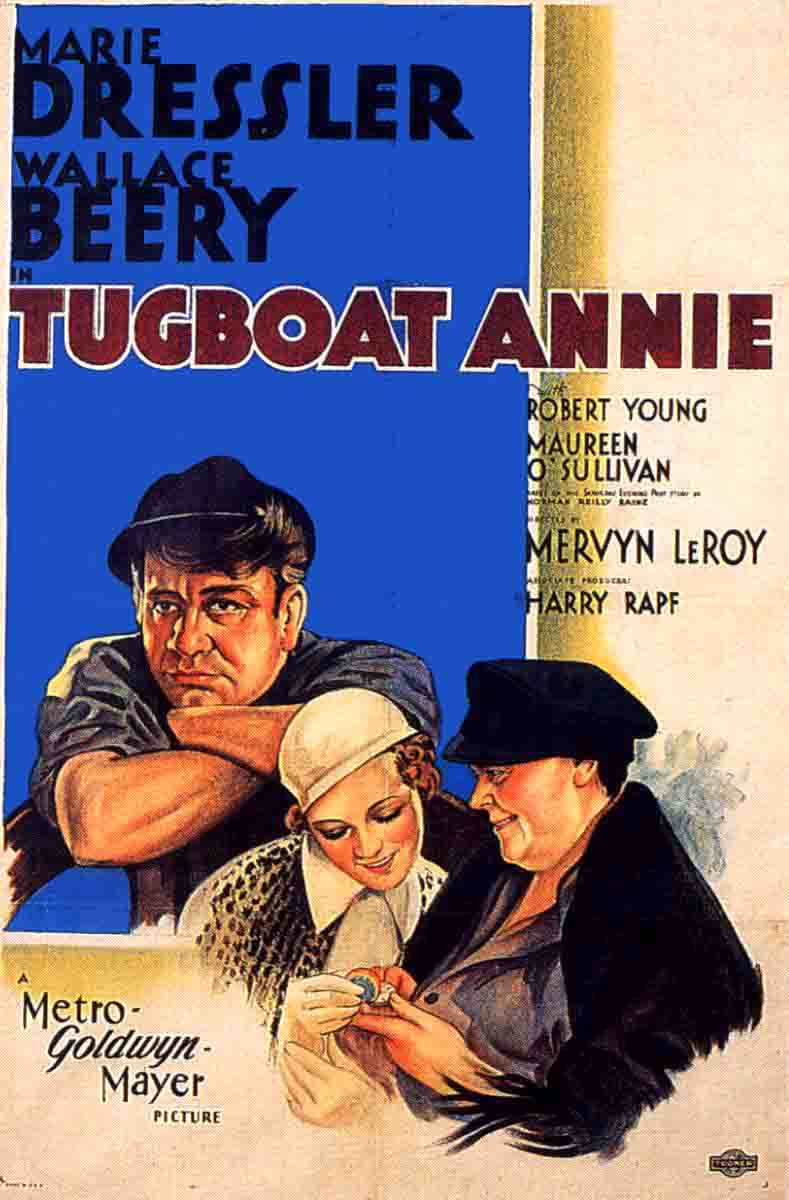
Promotional poster for Tugboat Annie
Image courtesy of Jerry Murbach, doctormacro.com.

Filming Tugboat Annie: Fact and Fiction on Puget Sound

ELEANOR BOBA

In 1933 Seattle played a part in a blockbuster movie. Tugboat Annie, the story of a wise-cracking female tug skipper in the mythical Secoma community on Puget Sound, was the hit of the day, in many cases being held over for a second week at movie houses across the country! It made over a million dollars for MGM, a huge sum in the day.

The movie, starring Marie Dressler and Wallace Beery, appeared in theaters only weeks after filming was complete. Background scenes featured Lake Union, Queen Anne Hill, and Puget Sound. A tugboat crashes into a ferry on Elliott Bay. And a passenger liner arrives at the Bell Street Pier to the cheers of thousands. 

The bulk of the filming of Tugboat Annie took place on sound stages, sound pools, and lakes in or near MGM's Culver City studios. However, enough scenes were filmed in and around Seattle to justify calling Tugboat Annie the first major movie to be shot in  Seattle. (Barring an episode of a Ripley's Believe it or Not filmed in Tacoma in 1932, it was the first film to be shot in Washington State.)


THE LEGEND OF ANNIE

The movie was based on the short stories of Norman Reilly Raine published in The Saturday Evening Post. Raine began writing his Annie stories in 1931 during a brief stint as a writing instructor at the University of Washington. He gathered inspiration for his popular tales from visiting the Seattle waterfront, incorporating the atmosphere and characters into his stories. 

The unsinkable Annie (a widow in the stories, 'though married in the movie) is a tough-talking, late middle-aged skipper who more than holds her own with both the seafaring and landlubbing men she encounters. She is master of the Narcissus, a sea-going tug. The yarns are full of salty language and local color.
"Tugboat Annie Brennan relinquished the wheel to Shiftless. 'When you wake up,' she told him, 'try to remember we're headin' for Everett, not China.' She stood in the wheelhouse doorway for a minute, and pushed back her old felt hat, drawing deep into her capacious chest the invigorating Puget Sound air, fragrant of pines and the sea. 'These is the days I like,' she went on contentedly, half to herself. 'There's a kind of a twang in the air. My goodness, I'm that hungry I could eat a horse and chase the driver." (From the story "When Greek meets Greek")

THE MYTH OF ANNIE

Legends take shape where history meets myth. The most enduring mythic element of Annie's legend is that her character was based on Thea Foss, matriarch of the Foss Family and founder of the Foss tugboat business (now Foss Maritime). This myth, nurtured over decades, has taken on the status of gospel despite the fact that the women shared little beyond business acumen. 


Thea Foss (left) with Mathilda Berg in front of the Foss family home in Tacoma, 1910.
 Image courtesy of Washington State Historical Society.

The reality is that Raine became acquainted with Wedell Foss, one of Thea's three sons and a partner in the family business. The Foss corporate history, written by Michael Skalley, credits Wedell Foss with suggesting the plot for Raine's first Tugboat Annie story. Raine himself identifies Wedell Foss as one of his informants in a telling interview with Pacific Motor Boat magazine (November, 1934):
"With the background for a story developing in my mind, and a tentative character to fit into it, I still had no plot. It was then that I sought the cooperation from the heads of the tugboat lines in Seattle and later with the Wrigley and Red Stack people down the coast. ....I sought out and talked with Wedell Foss, that canny Norse member of the Foss Company, Inc., and with George Cary, the genial partner of the Puget Sound Tug and Barge Company. From the first gentleman I got a stirring and interesting episode around which to build my plot; from the second I got material to supplement it; and so steamed back to my office full of beer and inspiration, and commenced to bang out Tugboat Annie."
Kate Sutton of the Providence Steamboat Company on board the Walter E. Sutton. When asked if she was the inspiration for Tugboat Annie, she reportedly said "I hope not!"  Photo courtesy of Providence Steamboat Company collection, Steamship Historical Society Archives, www.sshsa.org.

So who was Annie? Was she Wedell's mild-mannered mother, who never actually plowed the waters? Was she Kate Sutton, the owner and manager of the Providence Steamboat Company in Rhode Island whom Raine had heard of from a reporter friend? Was she entirely fictional?

The answer appears to be a little bit of each.....along with a large dose of Marie Dressler.

In the Pacific Motor Boat article Raine goes on to explain:
"Then, suddenly, I ran into an obstacle. The good lady in Providence was not, I speedily saw, a sufficiently colorful and definite character around whom to build the story....Then I recollected having seen, some time before in the film "Min and Bill" a marvelous piece of characterization of a waterfront character, played by that grand old trouper, Marie Dressler. I had my answer. I would write Miss Dressler into the character. Not, be it noted, with any idea of motion picture sale or production, but simply as someone whom I could visualize clearly as I wrote; who was rough of tongue and soft of heart; who could be adamant in a business deal, yet hold the affection and interest of magazine readers, as Miss Dressler won the affection and admiration of picture fans."
Thea Foss is not mentioned in the Pacific Motor Boat interview although Raine must have been aware of her through his friendship with her son. Wedell Foss, himself, is sometimes mentioned as the inspiration for Annie's rival in the movie and later her son's boss, Red Severn. Others see Severn as a nod to shipping magnate Robert Dollar.


THE MYTH OF MARIE

The bigwigs in Hollywood clearly identified Dressler with the part, as well. Fresh from her Oscar win for Min and Bill, the 64-year old* Dressler's star was riding high in 1933. Unfortunately her health was not. Knowing full well that she was battling cancer, MGM's Louis B. Mayer talked her into a punishing three-film contract over a six month schedule. 

Betty Lee's well researched biography of Dressler, based on primary source material including the diaries of Dressler's close companion, Claire Dubrey, details how Mayer protected his valuable property:
"As he had previously arranged for Dinner at Eight, Mayer ordered that the star's working day be confined to three hours, that stand-ins be used for rehearsals, and that a sofa be available for Dressler's use when the camera's were not turning."

This brings us to a second myth -- that Marie Dressler was in Seattle for the filming of Tugboat Annie. Despite misinformation from director Mervyn LeRoy's own self-serving and inaccurate autobiography, this is extremely unlikely. All scenes with Dressler and co-star Wallace Beery were filmed at MGM studios, even those on the water. There was no need for them to travel to Puget Sound, especially in Dressler's condition. The local newspapers, full of coverage of the film crew on Lake Union, make no mention of the presence of either star. 

Another fable connected to Dressler's mythical stay in Seattle can be traced to her own autobiography. The story goes that Louis B. Mayer purchased a small cottage Marie had admired and had it moved to Seattle for use as her dressing room and residence while on location. Dressler's use of the phrase "on location" was quickly misinterpreted by some biographers to mean Seattle. A close reading of Lee's biography of Dressler make it clear that the location was a lake near the Culver City studios.

Despite such pampering, the Tugboat Annie shoot was not easy on Dressler and others. In her autobiography, the actress describes filming in MGM’s tank:
“The most grueling piece of physical labor I ever put in was during the filming of the storm scenes in ‘Tugboat Annie.’ One coastwise sailor in the cast told me that in twenty years’ experience aboard tramp steamers he had never encountered rougher seas than those manufactured in our studios. They should have been good. Mr. Mayer spent $30,000 on the dock alone! Able-bodied men were slapped down by waves the script described as mild. There was more than one arm in a sling, and at least one leg in a plaster cast before we got through.” (Dressler, My Own Story, 271-72)


ACTORS AFLOAT

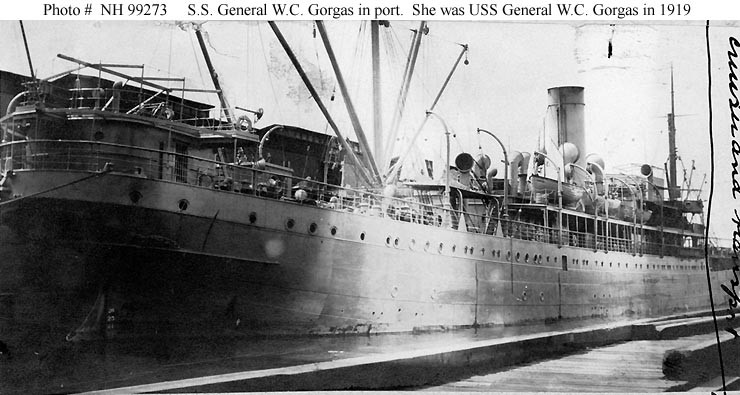
Marie and Wally may not have acted in Seattle, but there were other actors with strong local connections. MGM hired several local boats in starring roles: the Arthur Foss tugboat (then called the Wallowa) played the part of the Narcissus, Tugboat Annie's own boat; the Sea King, owned by the Gilkey Brothers, portrayed rival towboat Firefly; and a cannery ship, the General W.C. Gorges, a former German steamship, stood in for the fictional Glacier Queen, a passenger liner captained by Annie's son in the movie. The ferryboat Washington of Kirkland, sailing under its own name, is t-boned by the Narcissus in Elliott Bay. No fault of Annie's, the accident occurs when her husband is distracted by a cask of bootleg "hooch" floating in the bay.


Originally the Prinz Sigismund, the steamer was seized from the Germans during World War I and became an American troop transport, renamed the General W.C. Gorgas. Later the ship was used for commercial purposes, including salmon cannery work, until World War II when she once again became a troop transport. In 1945 she was sold to the Soviet Union. 
Photo courtesy of Naval History and Heritage Command.

Many other tugs and boats were hired as extras. Employees of Foss Tugboat and Barge were pulled into service by Wedell Foss, a strong booster for the production. 

Mervyn LeRoy came to town to direct his floating actors. The director of Little Caesar was quoted in the paper as saying "I've directed mobs of 'gangsters,' but you can't talk to a tugboat -- you must do it with signals to their pilots." (Seattle Daily News, April 11, 1933.) Crowds gathered on the shores of Lake Union to watch the action.


The tug Sea King played the part of the Firefly in Tugboat Annie.
Photo courtesy of Puget Sound Maritime Historical Society.


Because many of the maritime scenes were filmed in Culver City, it was necessary to build a replica of the Wallowa for exterior shots. Well-known naval architect Carl Nordstrom was hired to prepare plans of the boat. The Seattle Daily Times reports that Nordstrom was to draw up plans for both the Wallowa and the Sea King, but it is possible that the plans for the Sea King were never used. Portions of the Glacier Queen were constructed on MGM's Stage 22. 


That a replica of the Wallowa was built is confirmed by photos in the book M-G-M: Hollywood's Greatest Backlot which show the tug on a studio lake as late as 1970 alongside other famous film vessels including the Cotton Blossom from Showboat

Plans of the Arthur Foss as drawn by naval architect Carl Nordstrom. The venerable tug still floats at the historic ships pier at Lake Union Park. Image courtesy of Northwest Seaport.
Movie magic allowed these boats to change identity for subsequent movies. The Wallowa replica may or may not have been used as an extra in another Wallace Beery film, Barnacle Bill, in 1940. About the same time the erstwhile Narcissus had a narrow escape. According to M-G-M: Hollywood's Greatest Backlot
"In November of 1940, because of falling high-tension wires, fire raged through the area, destroying much of the [Lot One] set and threatening the old Tugboat Annie tugboat. The heat was so intense, and aggravated by a stiff ocean breeze, that windows in the studio's Cartoon Department across Overland Avenue were shattered....The tugboat survived, however, and would finally be secured on the Lot Three lake." (p. 119)


The galley of the Arthur Foss is a bit more cramped that that of the Narcissus in the movie. 
Photo, Alan Humphrey.

Seattleites also had their chance to be extras in a real Hollywood movie: somewhere between "a few score" and ten-thousand locals turned out as unpaid extras for the big scene where the Glacier Queen steams alongside the Bell Street Pier to brass bands and streamers. Other locals were on hand as background characters in the scenes filmed on Lake Union. A local houseboat dweller, Maria Fisk, was hired to double Marie Dressler in long shots on the boat. Seattle Mayor John Dore, enthralled by movie-making, reportedly donned a sailor's cap to appear in some scenes. Of course local pilots and crewmen worked the boats. Captain Clarence Howden piloted the Wallowa/Narcissus.

ARC LIGHTS IN SEATTLE

Tugboat Annie had its world premier at the Fifth Avenue Theater in Seattle on July 28, 1933. The city made the most of the honor. The first showing, at 11:30 in the morning, was heralded with a cacophony of ships whistles in the harbor. The big event in the evening involved fireworks, balloons, klieg lights, and many local celebrities including Mayor Dore and Lieutenant-Governor Victor Meyers. Governor Clarence D. Martin sent a telegram, as did the film's stars. The Seattle Star covered the celebrations:
"While a cool evening breeze brought the salty breath of Elliott bay up thru downtown canyons, glaring arc lights swept the faces of thousands who came to watch the first showing of the picture which is to send the echo of Puget Sound towboat whistles around the world." (July 29, 1933)
The ferryboat Washington of Kirkland makes its way through the Ballard Locks in this photo courtesy of Kirkland Heritage Society. The museum ship St. Paul can be seen in the background with an "open" sign attached to its foremast. 


TUGS IN TACOMA

Tacoma held its own premier of the movie three weeks following the Seattle event, rightfully claiming a share of cinema history. "Secoma," after all, was a mash-up of the two port cities. On the Sunday following the opening the first Tugboat Annie races were held on Commencement Bay to great fanfare. Myth has Marie Dressler personally presenting the silver loving cup to Captain Arthur Hofstead of the tug Peter Foss which had nosed out the Captain O.G. Olsen by a scant three feet.

Although the Marie Dressler Loving Cup may have been donated by the actress or her people, the Tacoma News Tribune informs us that the prize was presented by Leroy V. Johnson, general manager of the Jensen-von Herberg Company which owned the local theater showing Tugboat Annie.

Tugboat racing became a staple at maritime events in Puget Sound from that day.


A Tugboat Annie race photographed by Joe Williamson, circa 1940.
The Arthur Foss is in the lead. Courtesy of Puget Sound Maritime.

THAT'S A WRAP

Marie Dressler died of cancer a year to the day from the Seattle premier of Tugboat Annie. Her character, Captain Annie Brennan, pursued her adventures on Puget Sound in two more movies, a short-lived TV series, and some 75 short stories which trickled out from the pen of Norman Reilly Raine until the author's death in 1971.

Seattle would not see another major motion picture company until Elvis Presley came to town in 1962 to film It Happened at the World's Fair (released in 1963). By that time Seattle was identified more with the aerospace industry than with the maritime. Tugboat Annie remains a pleasant reminder of rough and tumble days in a waterfront town.


Cast and crew publicity photo for Tugboat Annie, 1933. From left front are Wallace Beery, Marie Dressler, Mervyn LeRoy, and writer Norman Reilly Raine. Famed cameraman Gregg Toland leans over Miss Dressler. Image Courtesy of Tacoma Public Library, C157920-3.


Selected sources:  

  • Selected articles from The Seattle Daily Times, The Tacoma News Tribune, The Seattle Star
  • Stephen Bingen, Stephen X. Sylvester, and Michael Troyan, M-G-M: Hollywood's Greatest Backlot, 2011.
  • Norman Reilly Raine, Tugboat Annie (collected stories), 1934.
  • Norman Reilly Raine, "That's How Tugboat Annie was born," Pacific Motor Boat, November 1934.
  • Mervyn LeRoy with Dick Kleiner, Mervyn LeRoy: Take One, 1974.
  • Marie Dressler with Mildred Harrington, My Own Story, 1934.
  • Matthew Kennedy, Marie Dressler: A Biography, 1999.
  • Victoria Sturtevant, A Great Big Girl like Me: The Films of Marie Dressler, 2009.
  • Betty Lee, Marie Dressler: The Unlikeliest Star, 1997.
  • Michael Skalley, Foss: Ninety Years of Towboating, 1981.
  • "The Providence Steamboat Company: Still a Family Business," PowerShips, the Magazine of the Steamship Historical Society of America, Summer 2012.
  • Gordon Newell, ed., The H.W. McCurdy Marine History of the Pacific Northwest, 1966.


*In good Hollywood tradition, Dressler's age is uncertain. Dates for her birth range from 1865 to 1868 to 1871, the date that appears on her grave marker.